



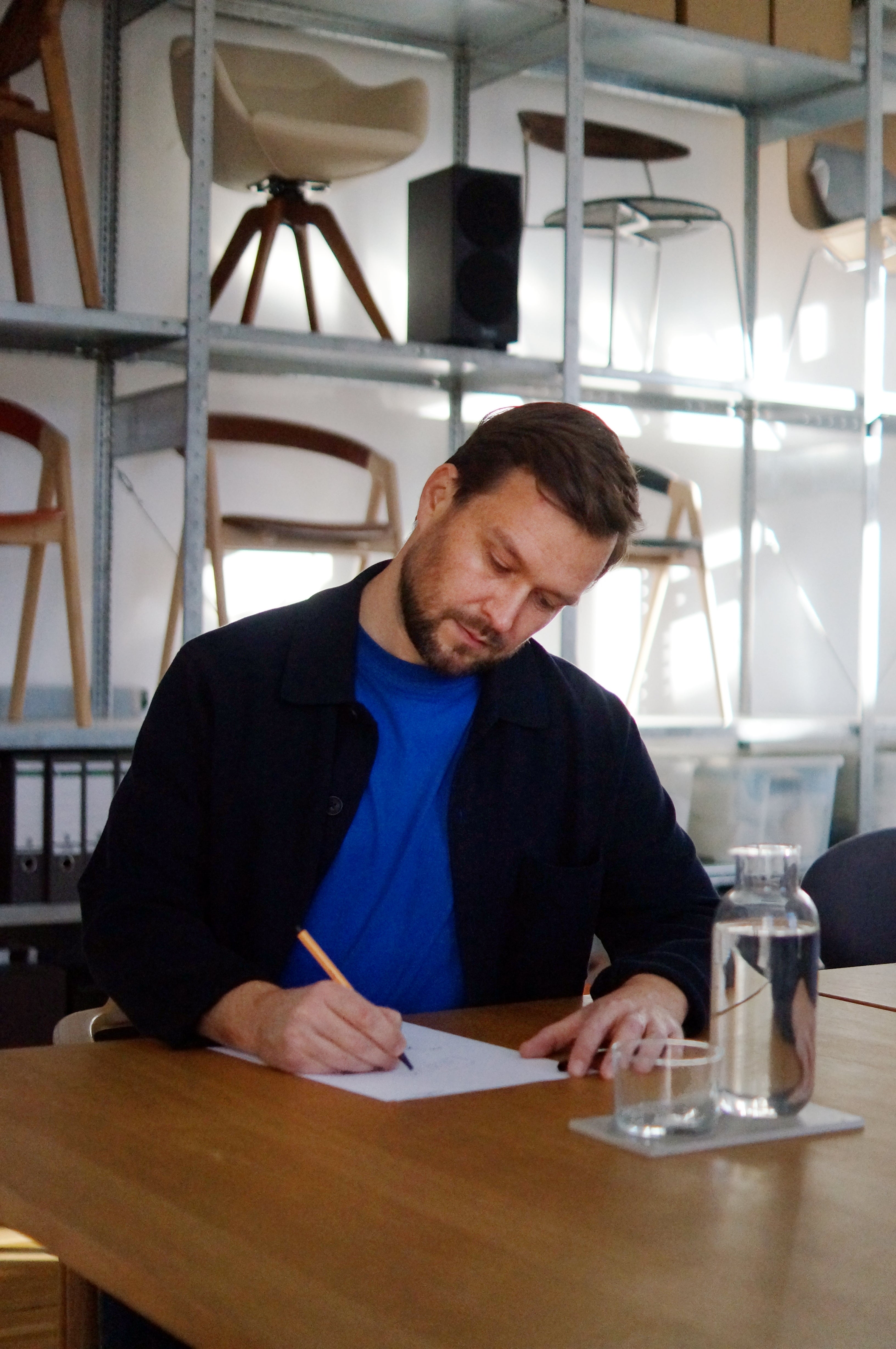
“Good interior design is felt before it is understood.”
designschneider was founded in 1993 by Michael Schneider in Cologne. Since May 2009 based in Berlin, the design studio led by Michael Schneider and Jan-Patric Metzger focuses on table culture, furniture, and sanitary design. designschneider works internationally with a focus on product and furniture design and has already been awarded multiple international design prizes.

In the interview, Jan-Patric Metzger provides insights into the philosophy and work of the design studio and reveals how the wall coat rack MALOU is a truly contemporary product design.
You design tableware, furniture – even urns and coffins. What connects these very different areas for you?
"Every product deserves good design. In furniture and tableware, design is already taken for granted, but in urns and coffins, it is not yet the case. The market for funeral products is traditionally very conservative, but new perspectives are slowly opening up there as well. Our concepts in this area were design studies that, although rarely went into series production, received significant media attention."
What defines good interior design and what criteria must product design meet to be considered successful?
"I personally believe that good interior design creates a balance between function, materiality, and atmosphere. Good interior design is felt before it is understood. Successful product design often seems self-evident – it does not impose itself but harmoniously integrates into the space and fulfills its purpose. At the same time, it also evokes emotions; it can excite, inspire, and make everyday life a little more beautiful. The quality of good design often lies in the details: in proportion, in tactile experience, in construction, and in the sustainability of a product."

How would you describe your personal design philosophy?
"Our goal is to create meaningful and sustainable products that are simple yet unique and iconic. For us, sustainability means considering the production, material selection, and logistics when designing a product. We strive to create high-quality, durable products that will bring joy to future generations as well. Functionality and aesthetics are inseparably linked for us. We design emotional products that stand the test of everyday use and are enjoyed by users."
Where do you find inspiration for your work?
"Inspiration can be found everywhere – in everyday life, while traveling, in architecture, or in encounters with interesting people. However, we often find inspiration where we least expect it. In our work as designers, we do not follow short-term trends. Our goal is to create timeless and durable products that accompany people for many years. MALOU is a good example of this: it is functional, minimalist, and at the same time emotional – an object that appeals to all ages and fits into various living situations."
How do you envision the living of the future from a designer's perspective?
"Especially in cities, compact living space is becoming an increasingly important issue. This brings functional, versatile furniture into sharper focus. At the same time, awareness of sustainability is rising – both in material selection and in production."
We believe that living will become more personal in the future: less, but better. Spaces that are clear, flexible, and individually designed – with things that last. MALOU reflects this very thought: a simple, thoughtful wardrobe that shows how much character can be found in a versatile design.


Designer Joa Herrenknecht in Interview
Home story: Architect-designed house by Ronja Rupalla