
WENN DESIGN
AUF ECHTES
LEBEN TRIFFT
Homestory: Architektenhaus von Ronja Rupalla
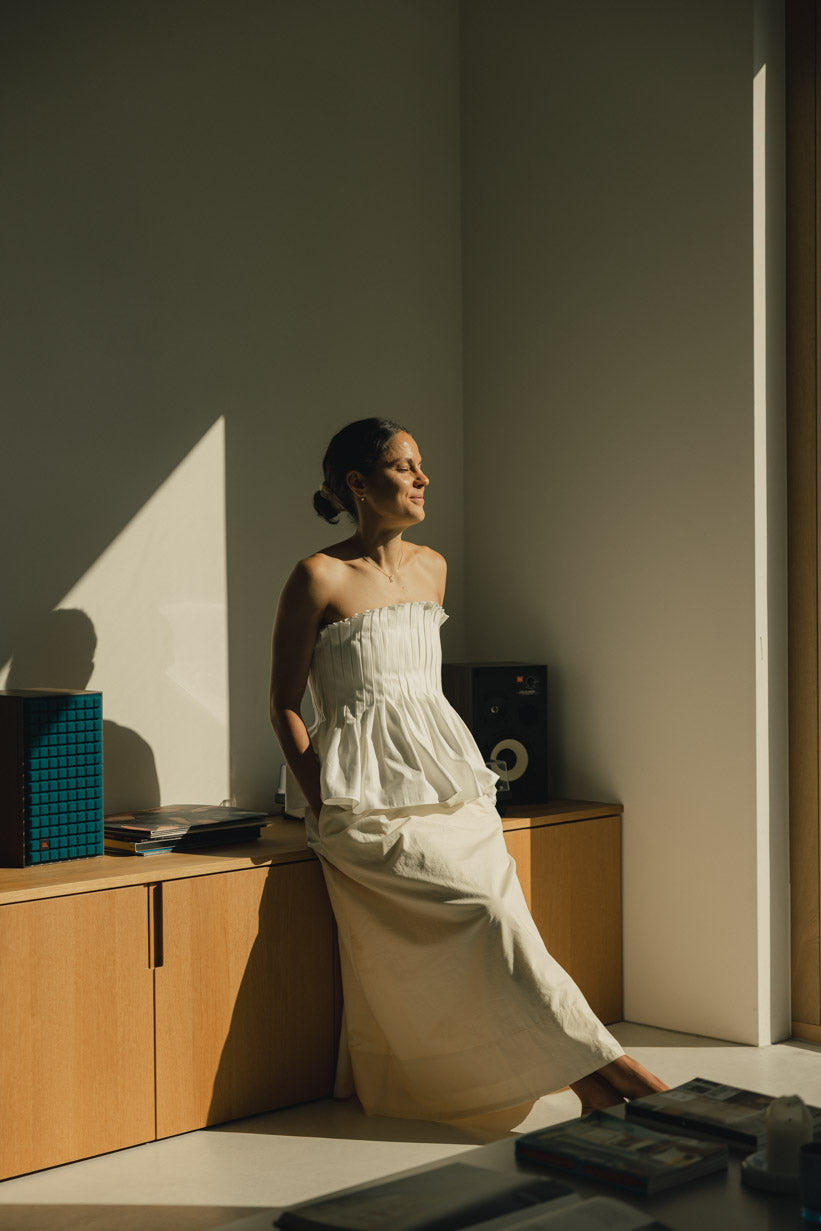
Ronja Rupalla – auf Instagram besser bekannt unter @housenumbereight_ – lebt mit ihrem Mann und ihrem dreijährigen Sohn seit zwei Jahren in ihrem 250 qm großen Zuhause im ländlichen Baden-Württemberg.
Vier Jahre dauerte die Planung des Hauses: Für die Architektur waren Architekten verantwortlich, bei der Innenraumplanung hat Ronja selbst als Interior Designerin sehr eng mit den Architekten gearbeitet. Das Ergebnis ist ein Zuhause mit einer ganz besonderen Beziehung zu seiner Architektur – und einem Haus, das das Leben der jungen Familie grundlegend verändert hat, privat wie beruflich.
Für Metallbude hat Ronja die Türen zu ihrem Zuhause geöffnet und uns zu einer persönlichen Haustour eingeladen. Eine Tour, die von einem Leben zwischen Familie, Selbstständigkeit und Hosting erzählt – und davon, wie modernes Interior Design aussehen kann, wenn man sich bewusst von Trends und der Angst vor bestimmten Materialien löst.
Mit dem Hausbau ging es für euch auch raus aus der Stadt und zurück in die Heimat aufs Land. Was hat sich geändert, seitdem ihr hier draußen wohnt?
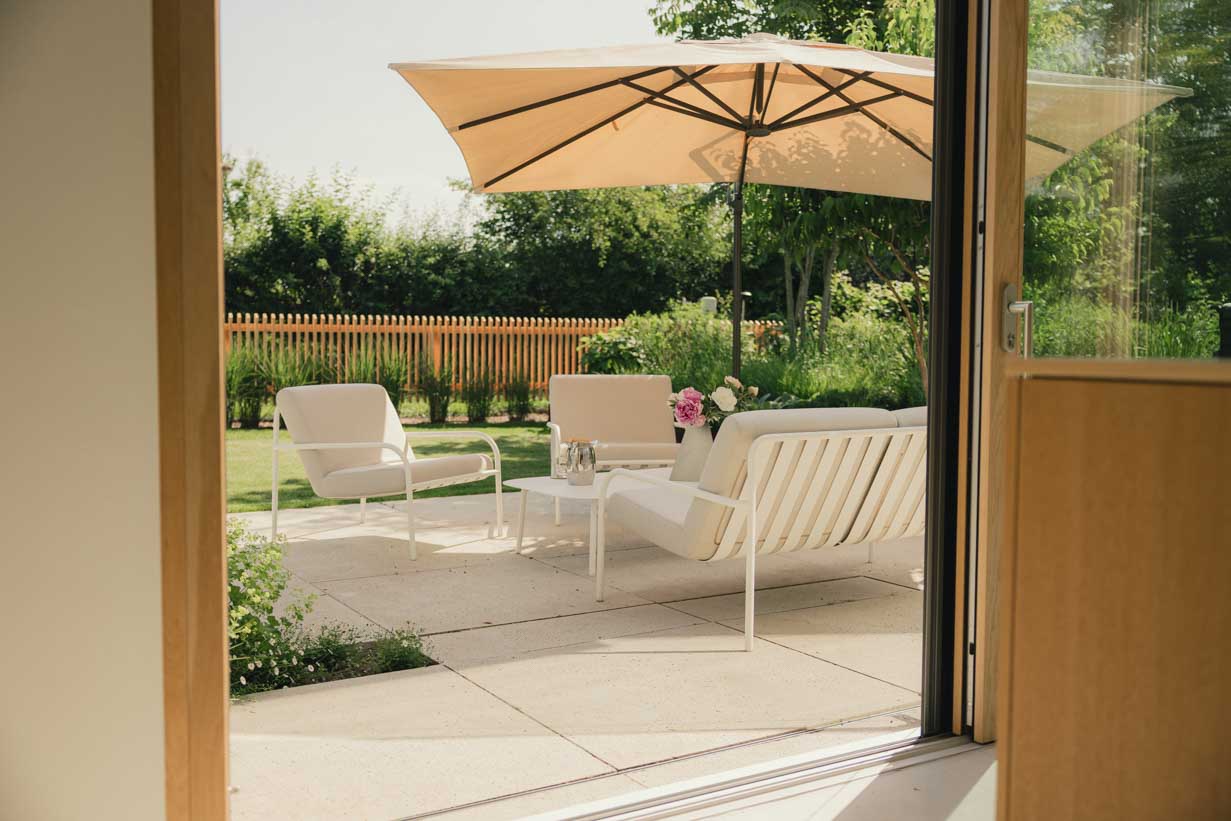
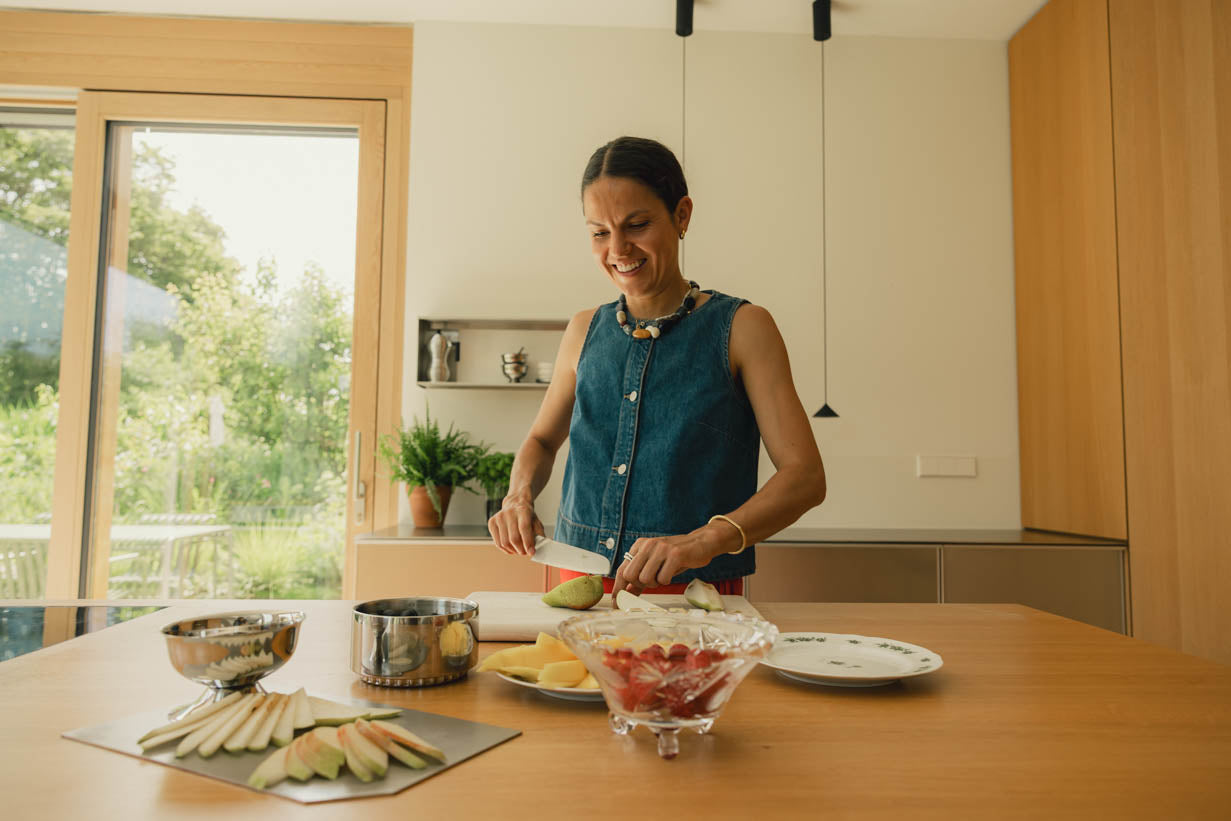
„Mein Mann und ich haben jahrelang in verschiedenen Städten gewohnt und auch in teilweise sehr schönen Wohnungen. Einmal sogar in einer umgebauten Scheune mit Garten. Aber trotzdem immer mitten in der Stadt. Mit dem Hausbau haben wir uns dann entschieden, aufs Land zu ziehen – und das hat schon ziemlich viel in unserem Privat- und auch in unserem Freizeitleben verändert. Wir haben es früher geliebt, in Restaurants und Cafés zu gehen, haben uns mit Freunden eigentlich immer irgendwo draußen getroffen und waren viel in der Stadt unterwegs. Jetzt verlagert sich das alles mehr in unseren Garten und in unser Haus. Deshalb ist es für uns eines der wichtigsten Dinge, dass unser Zuhause einladend ist, wir hier jederzeit Gäste empfangen können und immer Freunde um uns haben. Dass wir uns samstags hier auf einen Kaffee treffen können, statt in einem hippen Café ums Eck, ist einfach schön. Es ist ein ganz anderes Gefühl, das eigene Haus auf diese Weise genießen zu können.“
„Ein Haus muss für die Menschen funktionieren, die darin leben.“
Habt ihr diese Veränderungen auch schon bei der Planung eures Hauses bedacht?
„Absolut. Wir sind sehr soziale Menschen und haben schon immer gerne Freunde zu Gast. Deshalb ist unser Haus auch darauf ausgerichtet, ein echtes Hosting-Haus zu sein – mit offenen Türen für Freunde und Familie. Wir lieben es, Dinnerpartys zu schmeißen, am Wochenende gemeinsam zu brunchen oder uns einfach auf einen Kaffee im Garten zu treffen. Wir haben einfach gerne Menschen um uns herum. Deshalb haben wir schon damals versucht, uns unseren Alltag vorzustellen und das Haus darauf auszurichten. Ich finde, dass ein Haus immer für die Menschen funktionieren muss, die darin wohnen. Als wir das Haus geplant haben, hatten wir ja auch noch kein Kind. Aber wir wussten, dass wir irgendwann Kinder haben möchten. Für uns war somit auch das Familienleben dabei extrem wichtig.“
„Ich brauche den Zustand
visueller Ruhe auch für
meine mentale Gesundheit.“
Eine Frage, die Dir dazu häufig gestellt wird: Minimalistisch wohnen und Kleinkind – wie funktioniert das?
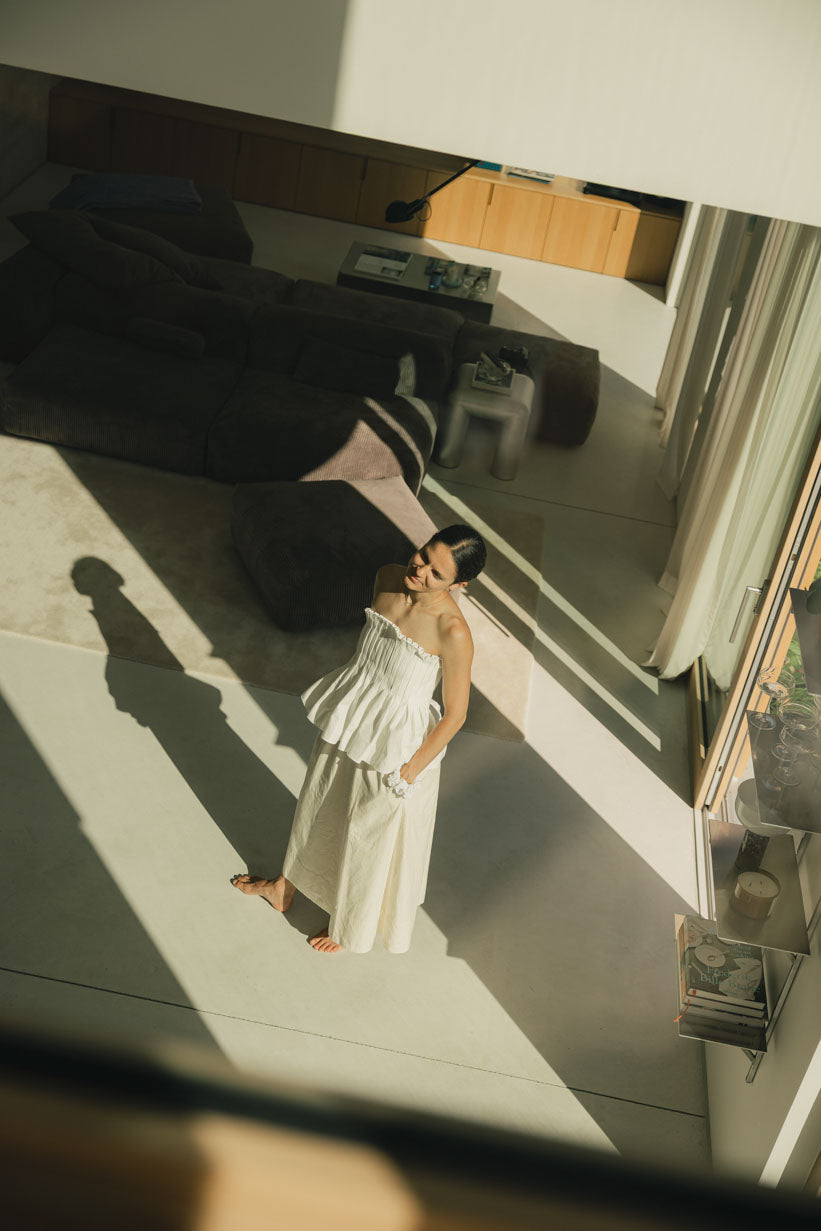
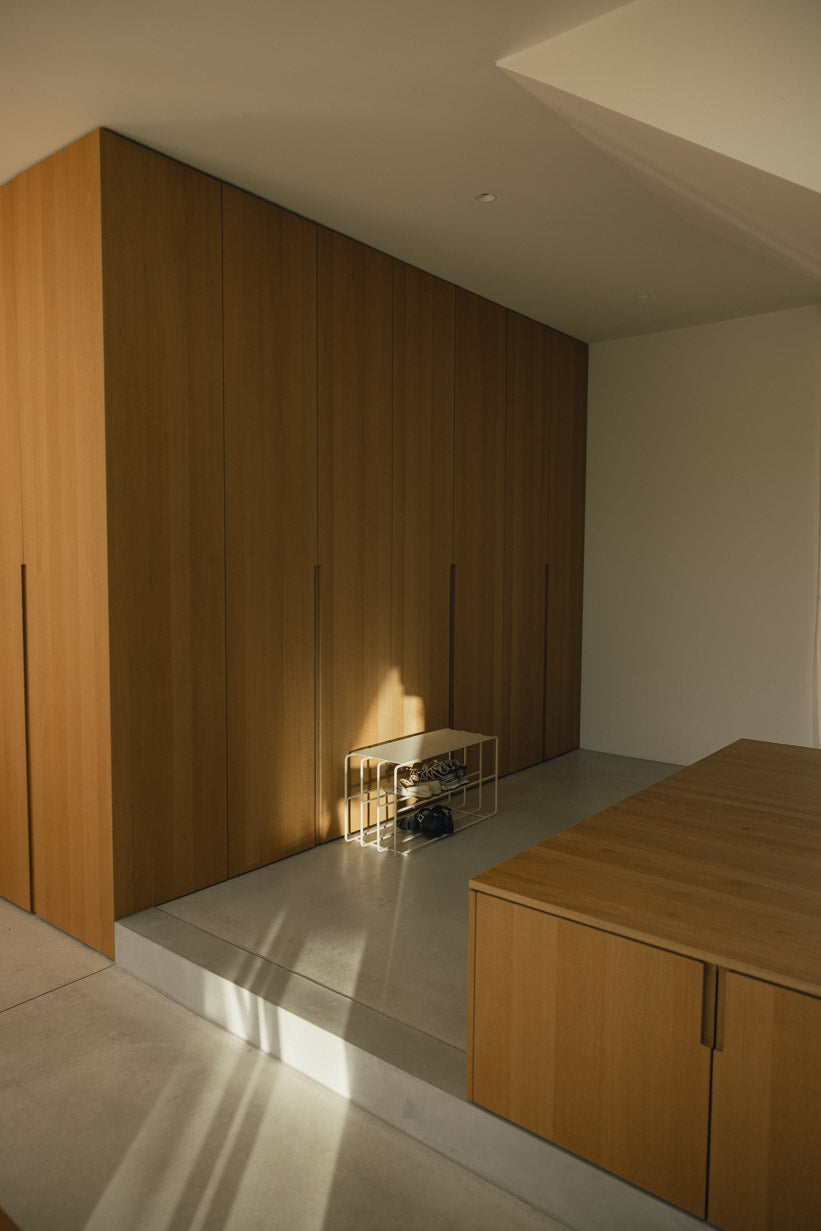
„Wir wohnen hier als Familie mit einem Kleinkind, das auch gerne mal ein bisschen Unordnung macht. Natürlich ist es hier nicht immer so ordentlich, wie es auf Instagram ausschaut. Tagsüber liegen hier auch mal Spielsachen herum. Aber ich glaube, ein wichtiger Faktor dafür, dass es bei uns trotzdem immer schnell wieder aufgeräumt aussieht, ist, dass wir überall Stauraum und Einbaumöbel mit Stauraum eingeplant haben. Die Spielsachen sind innerhalb von Sekunden wieder eingeräumt. Und auch unser Sohn weiß, dass er Dinge, die er herausholt, anschließend wieder wegräumen muss. Ehrlicherweise ist das auch etwas, das ich für meine mentale Gesundheit brauche: zu wissen, dass ich diesen Zustand visueller Ruhe schnell wiederherstellen kann.“
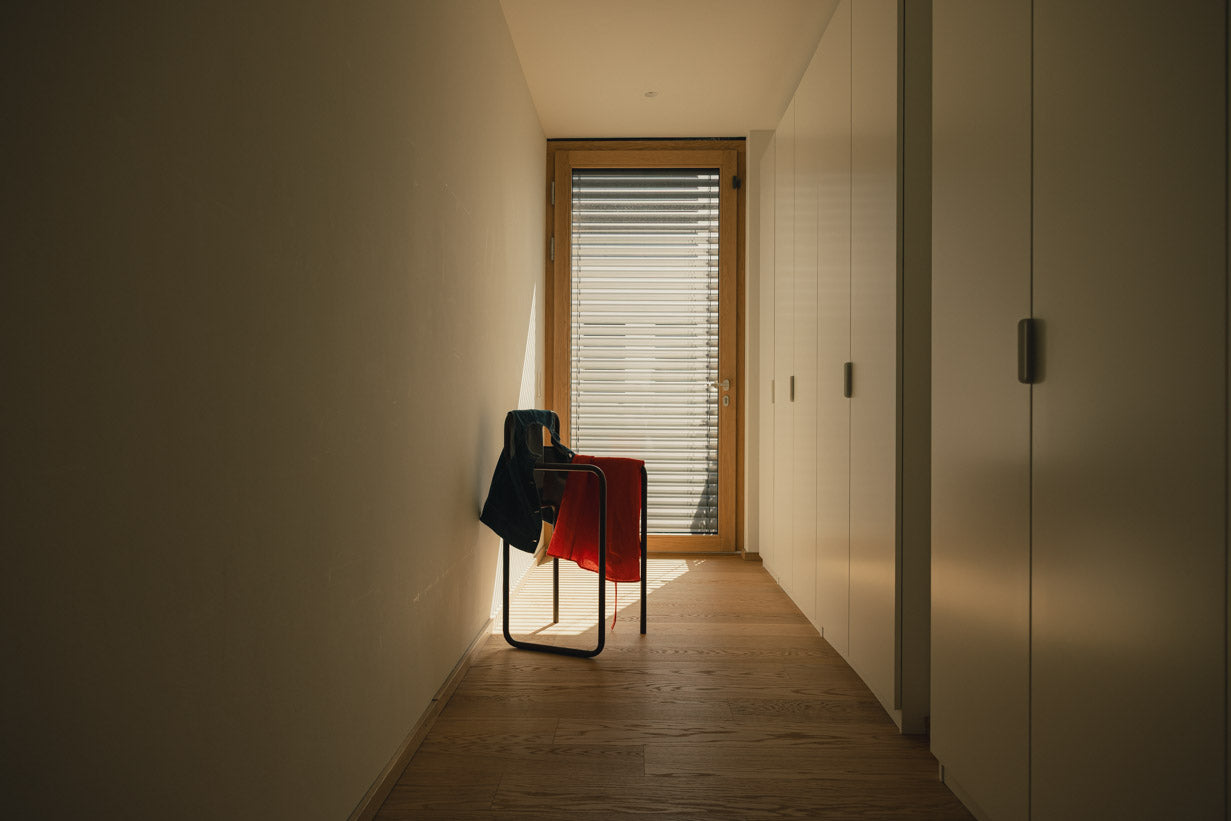
„Man versteht die Architektur sehr schnell – und trotzdem ist sie spannend.“
Mit welchen Wörtern – neben „minimalistisch“ – würdest Du Dein Wohnkonzept und Interior Design beschreiben?
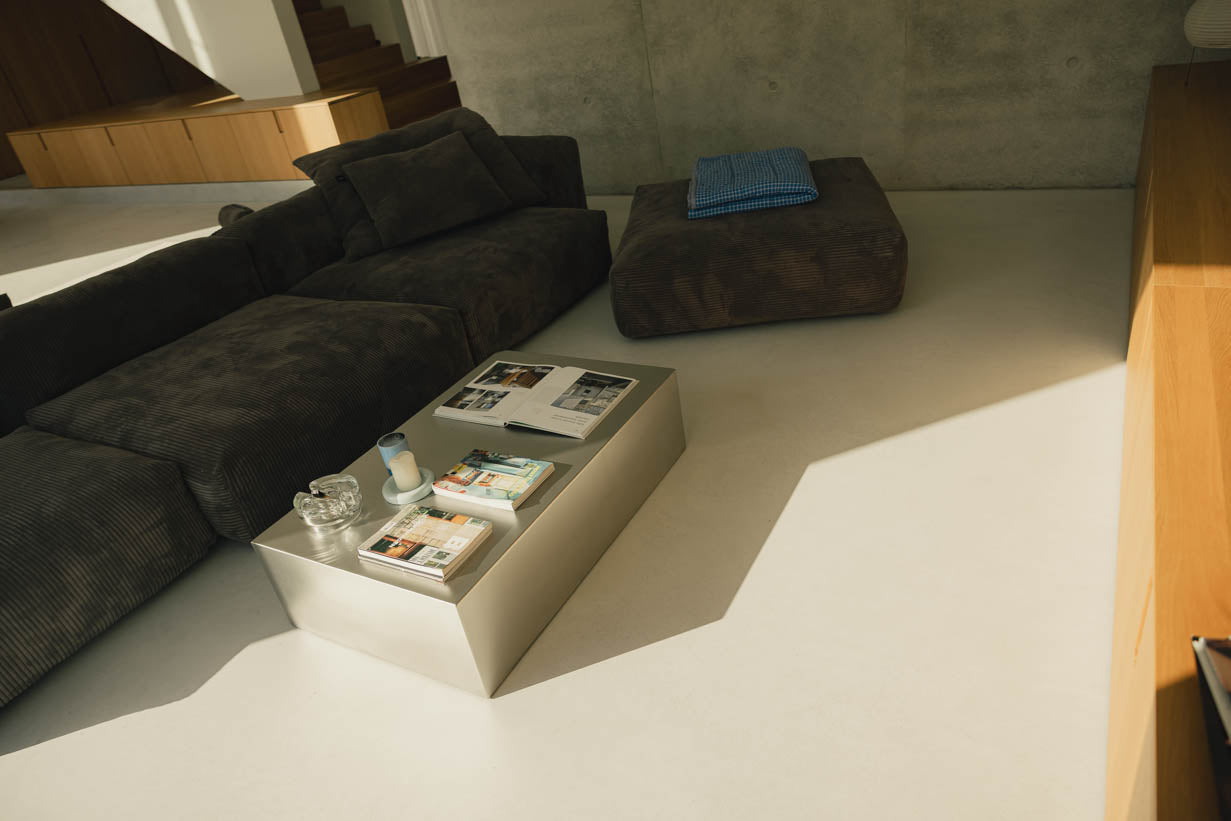
„„Minimalistisch“ – definitiv. Das heißt nicht, dass wir minimalistisch leben oder besonders wenig Dinge haben, aber das Interior Design unseres Hauses ist sehr reduziert. Ansonsten würde ich sagen: „soft“. Wir arbeiten mit vielen weichen Materialien, und alles geht so fließend ineinander über, dass das gesamte Interior entsprechend soft wirkt. Unsere Architektur ist sehr „klar“. Wir haben überall Kanten, aber relativ wenige Ecken. Dadurch versteht man die Architektur sehr schnell. Was nicht heißt, dass sie nicht spannend ist, aber sie hat einfach eine sehr klare Formsprache. Wir haben außerdem großen Wert auf viele Fenster gelegt, damit überall Licht reinkommt. Ich glaube, das Besondere an unserem Haus ist, dass wir eine Nordausrichtung haben, aber durch die vielen Fenster trotzdem so viel Licht ins Haus kommt, dass es überhaupt nicht stört oder auffällt. Daher auch „hell“. Und das letzte Wort wäre „warm“. Obwohl wir sehr viele Betonwände, ausschließlich weiße Wände und nur wenig Deko haben, wirkt das Haus durch das viele Holz und die soften Materialien insgesamt trotzdem sehr warm.“
Was sind Deine liebsten Materialien in Sachen Interior Design und wie kombinierst Du sie?
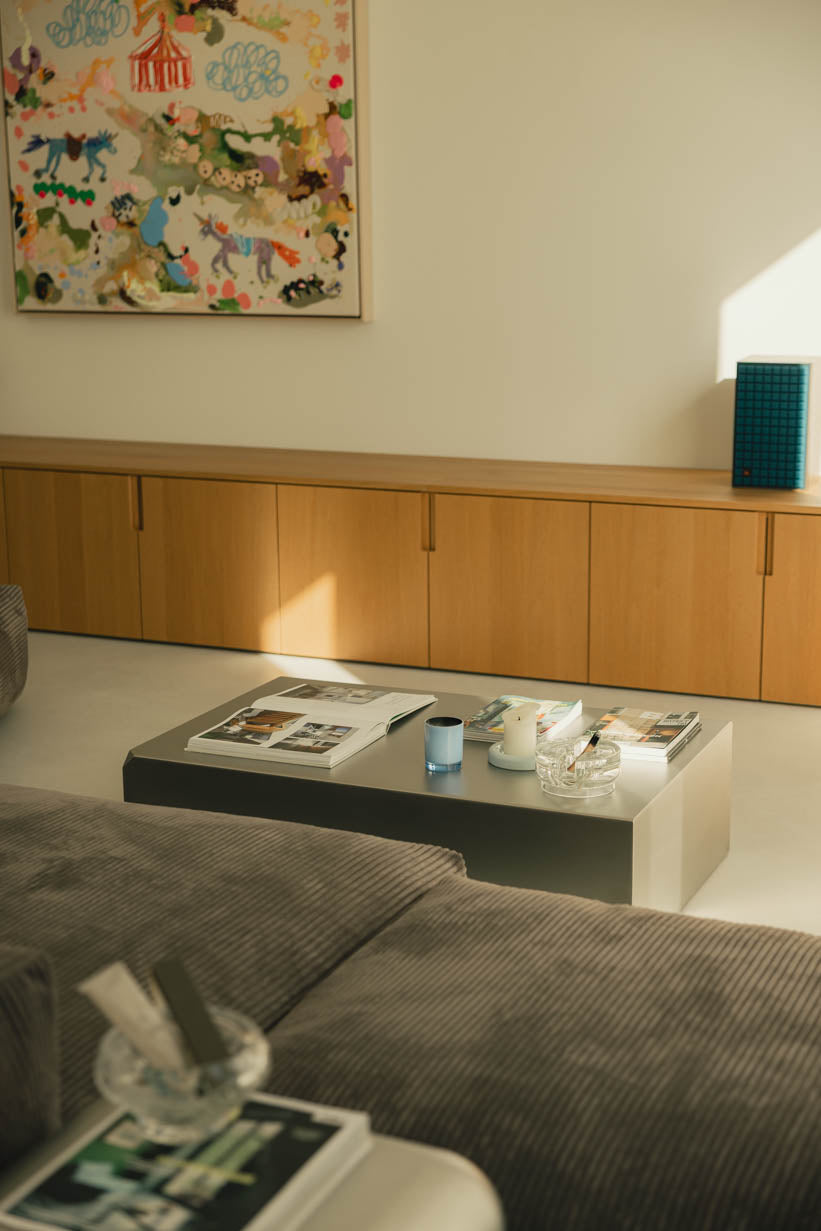
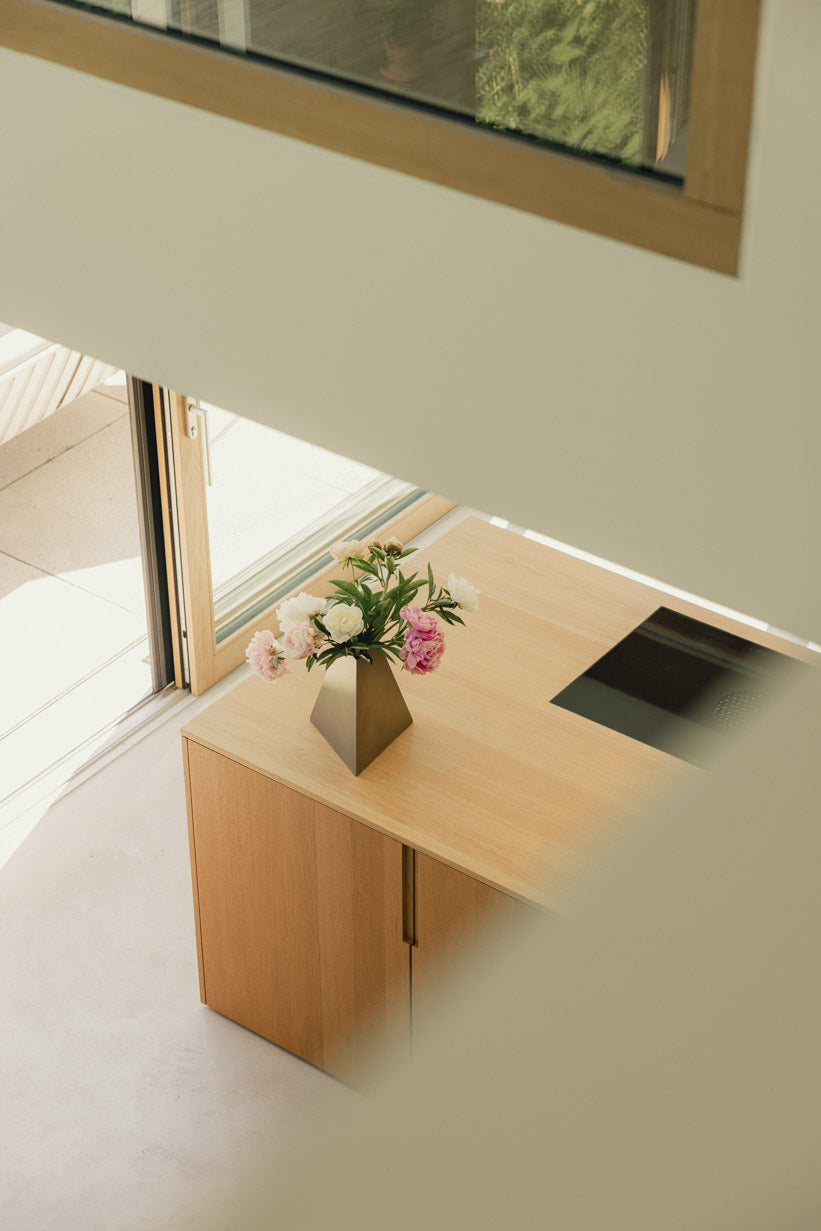
„Ich arbeite super gerne mit Beton – das ist, glaube ich, sehr offensichtlich. Ich finde, dass Beton ein so schönes und natürliches Material ist und die Farben von draußen einfach nach drinnen holt. Da Beton allerdings relativ kühl ist, muss man das natürlich ein bisschen ausbalancieren. Deshalb haben wir auch sehr viel Holz bei uns eingesetzt und dabei versucht, es möglichst natürlich zu halten. Ich finde, Holz und Beton harmonieren einfach wunderschön miteinander. Eines meiner absoluten Lieblingsmaterialien ist außerdem Edelstahl bzw. Metall generell. Das bringt nochmal einen sehr modernen Aspekt mit rein und ist gleichzeitig ebenfalls ein ganz natürliches Material. Beton, Edelstahl und Holz funktionieren für mich einfach unglaublich gut miteinander.“
„Auch Metall kann ein Zuhause warm und einladend wirken lassen.“
Apropos Metall: Welche Rolle spielt Metallbude in Deinem Zuhause? Und wie passt Metall eigentlich in (D)ein warmes Wohnkonzept?
„Wir haben in unserem Haus quasi in jedem Raum Metallbude. Das hat sich irgendwie so ergeben. Viele Sachen habe ich tatsächlich schon vor dem Einzug gekauft. Ich liebe das reduzierte Design, das einfach in jeden Raum passt und gleichzeitig super hochwertig aussieht. Es passt zum Rest der Einrichtung, man muss nicht viel darüber nachdenken und es fügt sich einfach ein – während es gleichzeitig außergewöhnlich schön aussieht. Metall ist für mich ein echtes Key-Element in der Einrichtung. Ich bekomme ganz oft Nachrichten und Fragen von Kunden, die Bedenken haben, dass Metall nicht warm sein und nicht in ein warmes Interieur passen kann. Für mich ist das ein Irrglaube. Nur weil ein Interieur warm, einladend und ein Wohlfühlort sein soll, heißt das nicht, dass man ausschließlich warme und fluffige Materialien verwenden darf. Im Gegenteil: Dann fehlt oft die Balance und das Gesamtbild wirkt nicht stimmig. Man muss für mich immer eine gute Balance zwischen kühlen, glatten Materialien und warmen, soften Materialien finden. Sodass man einen Raum betritt und sich einfach denkt: Hier passt alles zusammen.“
„Die Schnelllebigkeit von Trends ist super anstrengend.“
Wie stehst Du zu Interior Trends? Macht es Sinn, Trends nachzugehen?
„Trends kommen und gehen schnell. Deshalb macht es total Sinn, Trends über Dekoelemente oder kleinere Möbelstücke zu integrieren, die man auch mal austauschen kann. Aber ich finde, die Key-Elemente eines Hauses – Boden, Einbauschränke, Küche – müssen einfach zeitlos sein. Die sollte man auch noch in 10, 20 oder 30 Jahren gerne anschauen können. Mit kleineren Elementen kann man dann viel mehr spielen. Aber selbst bei der Deko versuche ich, nicht jedem Trend hinterherzulaufen. Dieses Schnelllebige ist manchmal einfach super anstrengend. Gerade wenn man viel Social Media konsumiert und auf Pinterest und Instagram unterwegs ist, sieht man ständig etwas Neues, das gerade alle haben. Ich finde, wenn man versucht, das ein bisschen auszublenden und Dinge erstmal auf eine Wunschliste setzt und ein paar Wochen dort stehen lässt, merkt man oft, dass man vieles eigentlich gar nicht braucht. Und wenn man bewusster auswählt, wird das Interior am Ende auch viel besonderer.“