


WHEN DESIGN
MEETS REAL
LIFE
Homestory: Architect's house by Ronja Rupalla
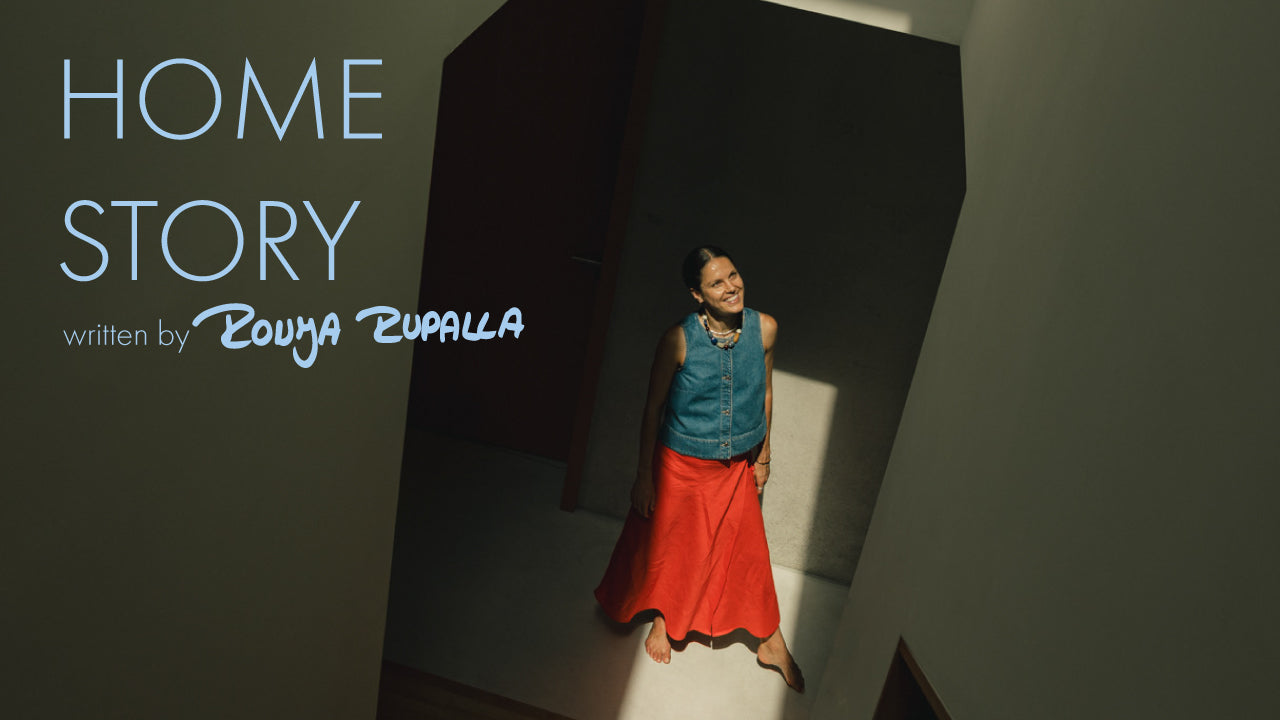
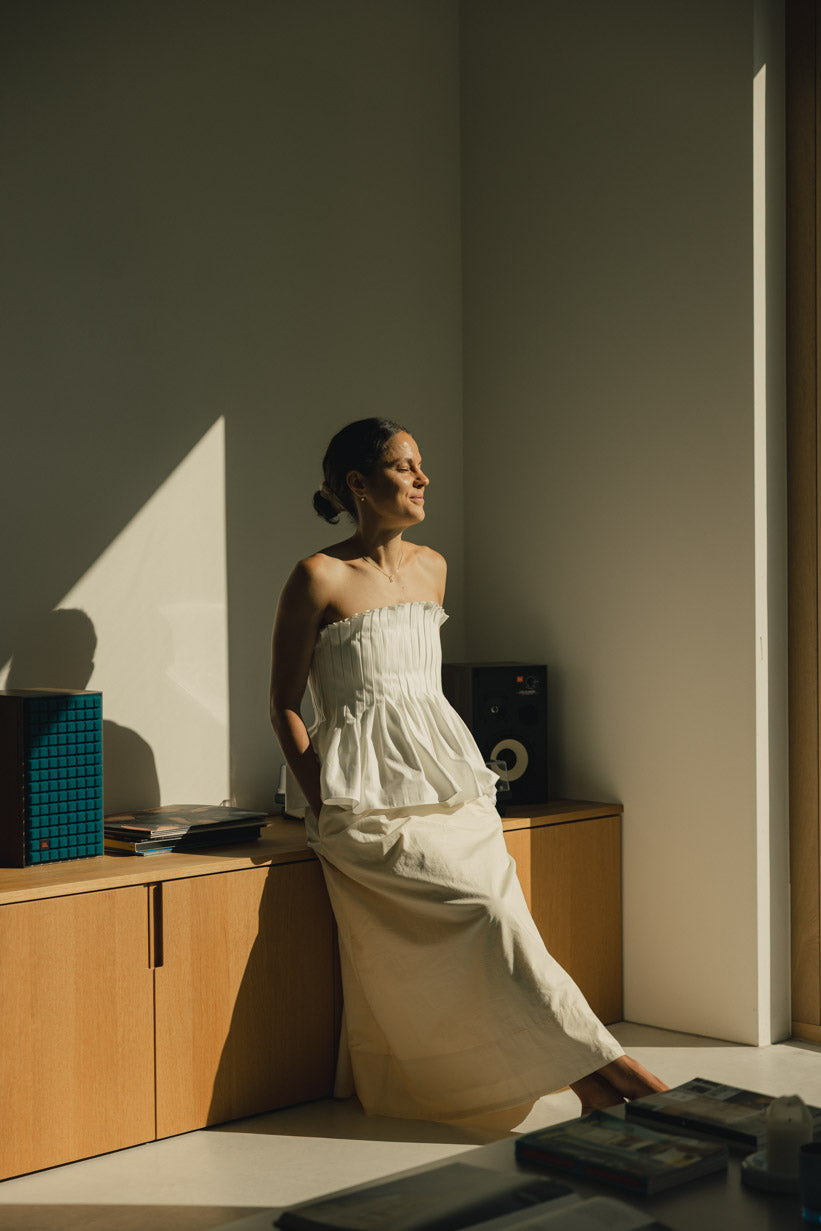
Ronja Rupalla – better known on Instagram as @housenumbereight_ – has been living with her husband and three-year-old son in their 250 sqm home in rural Baden-Württemberg for two years.
Planning the house took four years: Architects were responsible for the architecture, and Ronja herself was the interior designer for the interior planning worked very closely with the architects. The result is a home with a very special relationship to its architecture - and a house that has fundamentally changed the young family's life, both privately and professionally.
For Metallbude , Ronja opened the doors to her home and invited us to a personal house tour. A tour that tells about a life between family, self-employment and hosting - and about what modern interior design can look like if you consciously break away from trends and the fear of certain materials.
When you built your house, you also went out of the city and back home to the country. What has changed since you lived out here?
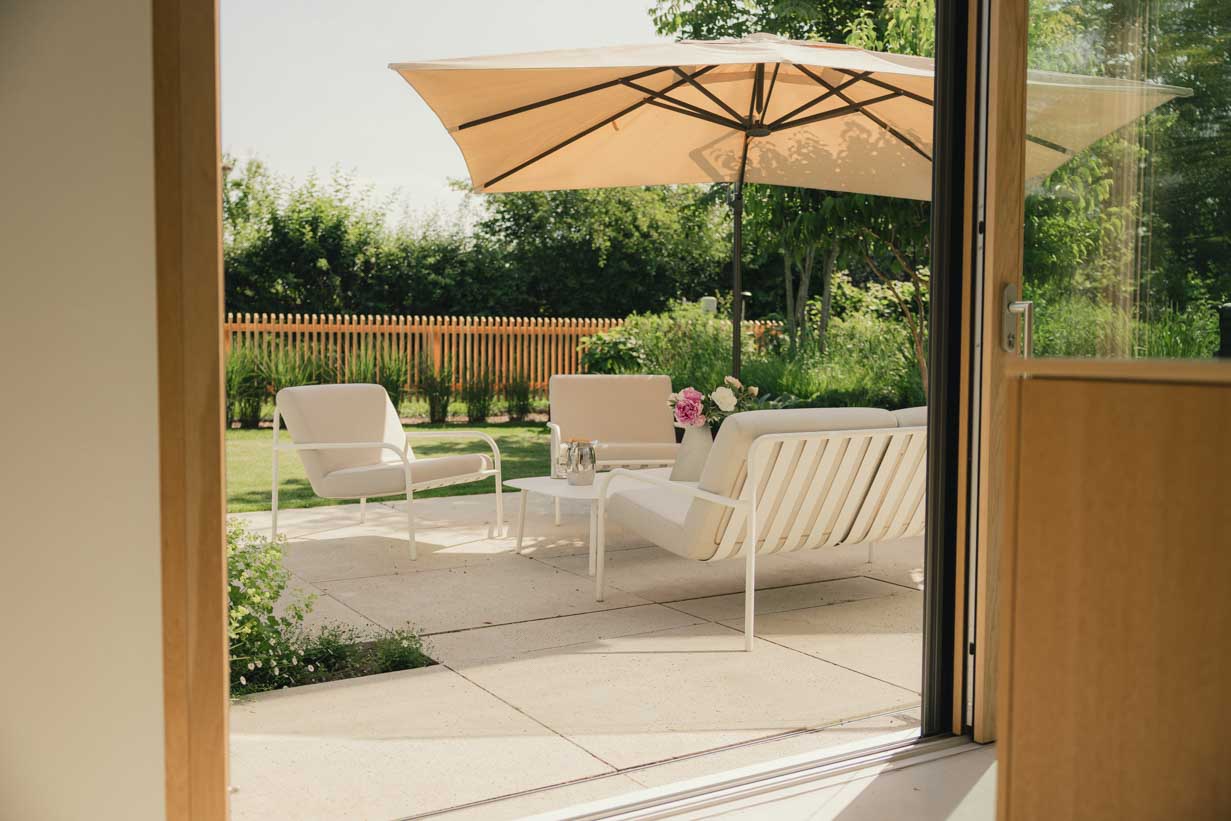
"My husband and I have lived in different cities for years and in some very nice apartments. Once even in a converted barn with a garden. But still always in the middle of the city. When we built the house, we decided to move to the country - and that has changed quite a lot in our private and also in our leisure life. We used to love going to restaurants and cafés, and actually always met up with friends somewhere outside "We spend a lot of time in the city. Now everything is moving more into our garden and into our house. That's why one of the most important things for us is that our home is inviting, that we can welcome guests here at any time and that we can always meet up here for a coffee instead of in a hip café around the corner. It's a completely different feeling to be able to enjoy our own house in this way."
“A house has to function for the people who live in it.”
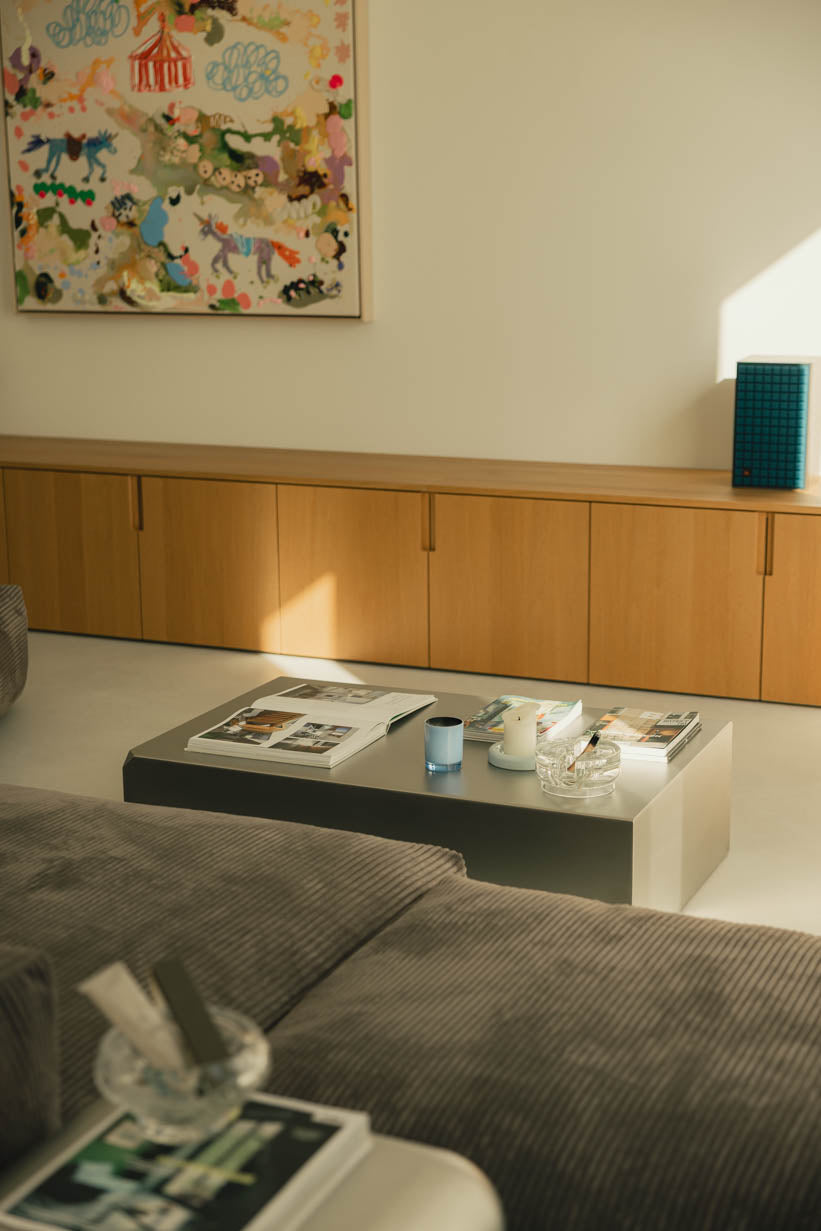
Have you considered these changes when planning your house?
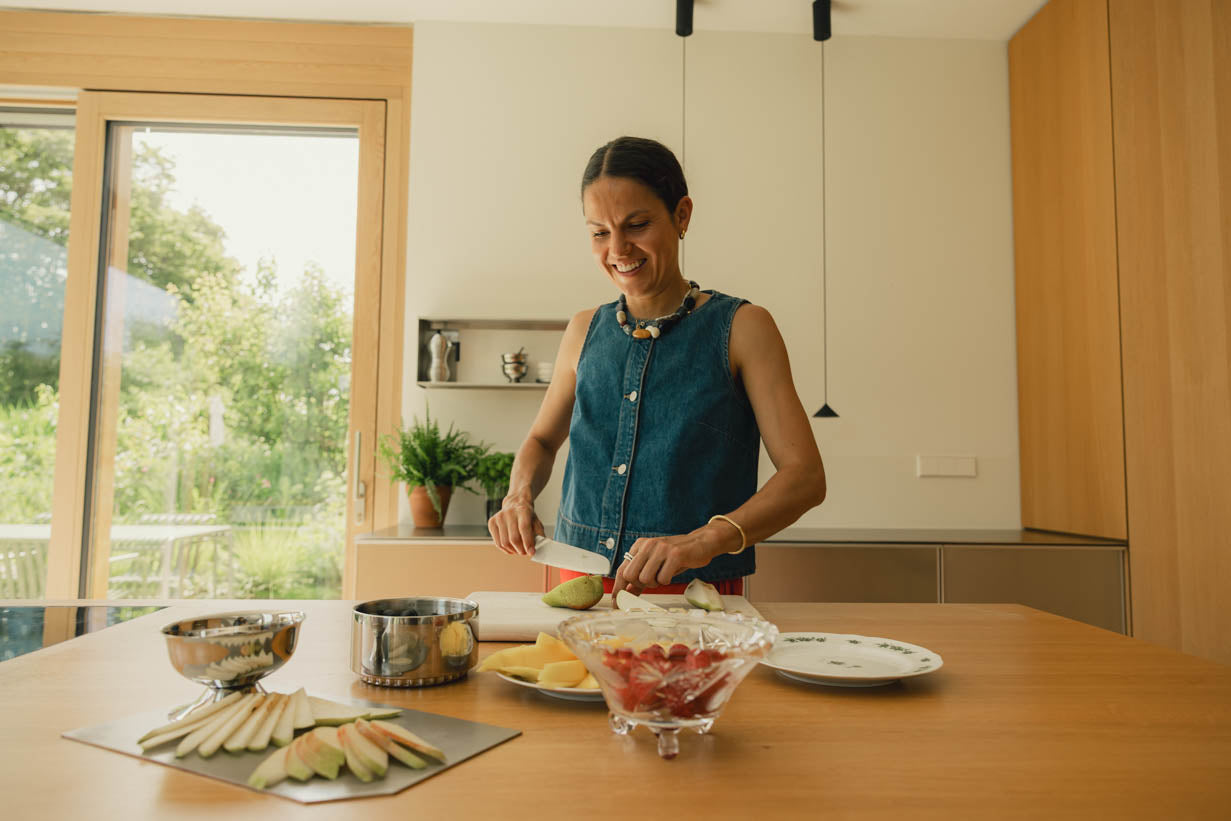
"Absolutely. We are very social people and have always enjoyed having friends over. That's why our house is designed to be a real hosting house - with open doors for friends and family. We love throwing dinner parties, having brunch together on the weekend or just meeting up for a coffee in the garden. We just like having people around "That's why we tried to imagine our everyday life and adapt the house to that. I think that a house always has to work for the people who live in it. When we planned the house, we knew that we would like to have children at some point."
“I need the state
of visual calm also for
my mental health.”
A question that you're often asked about this: Minimalist living and a small child - how does it work?
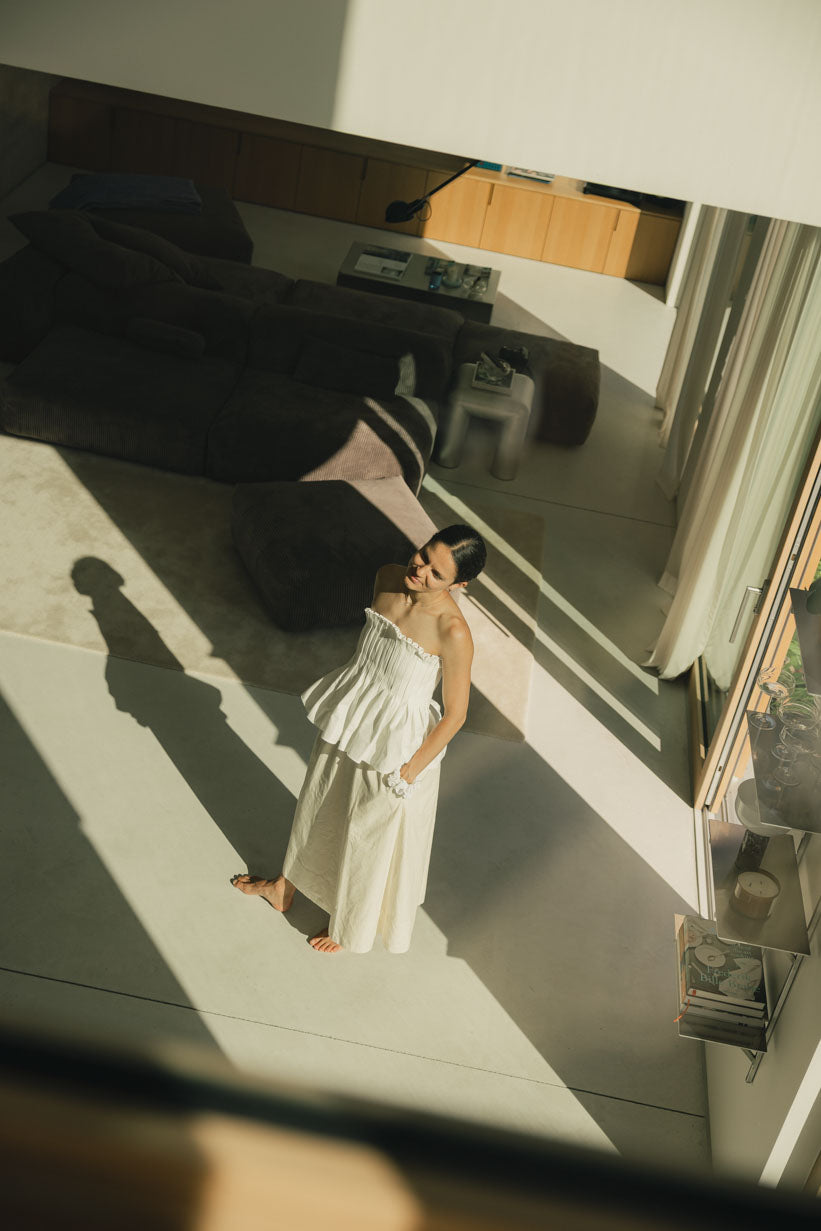
"We live here as a family with a small child who also likes to make a bit of a mess. Of course, it's not always as tidy here as it looks on Instagram. There are also toys lying around here during the day. But I think an important factor in why things always look tidy quickly is that we have storage space and built-in furniture everywhere “The toys can be put away within seconds. And our son also knows that when he takes things out, he has to put them away again. To be honest, that’s something I need for my mental health: to know that I can quickly restore this state of visual calm.”
“You understand the architecture very quickly – and yet it is still exciting.”
Which words – besides “minimalist” – would you use to describe your living concept and interior design?
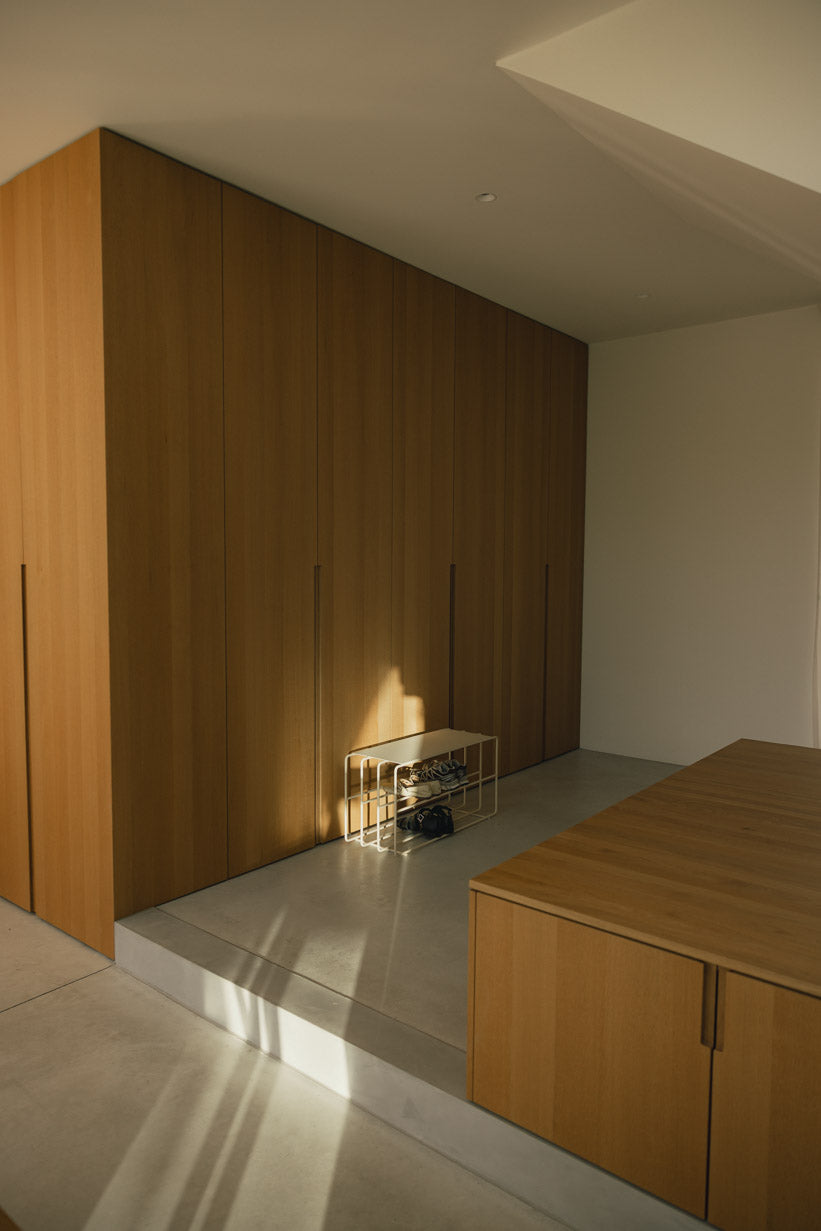
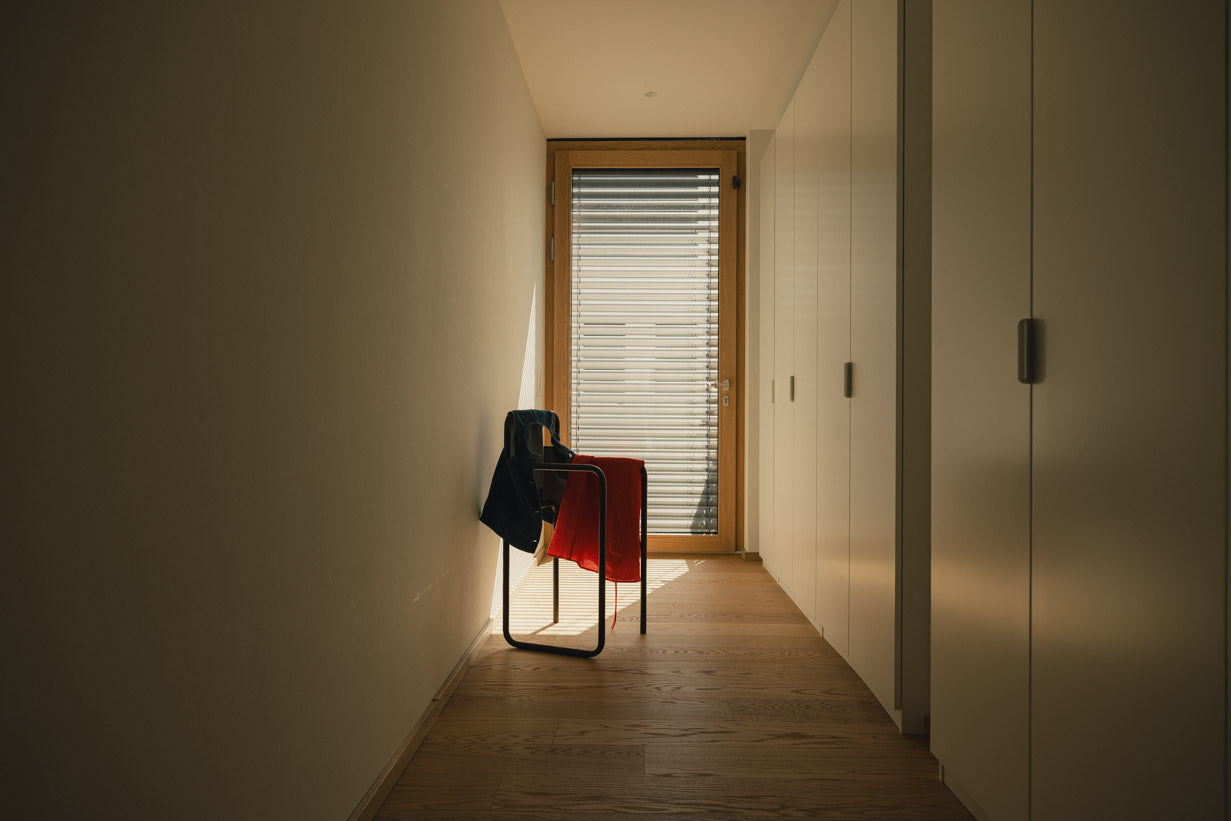
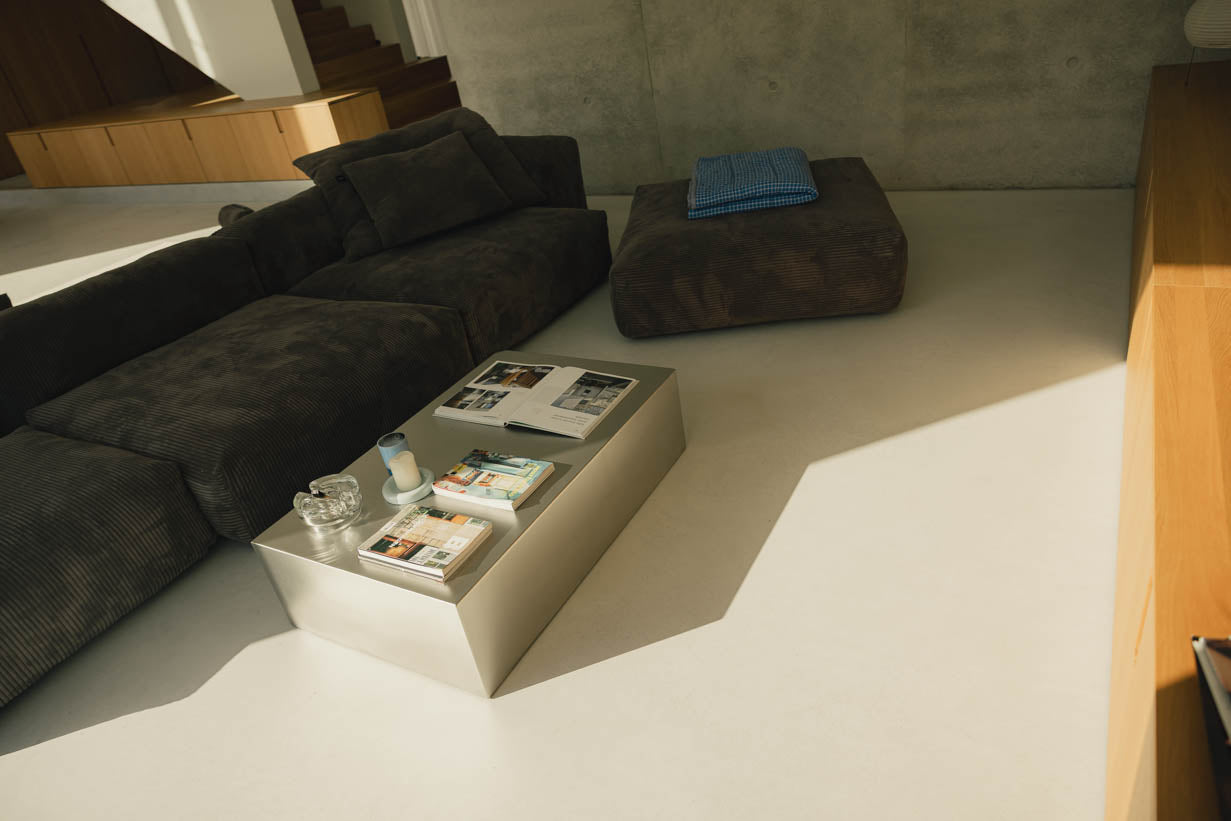
““Minimalist” – definitely. That doesn't mean that we live minimalistic lives or have very few things, but the interior design of our house is very reduced. Otherwise I would say: “soft”. We work with a lot of soft materials, and everything flows into one another so smoothly that the entire interior appears correspondingly soft. Our architecture is very “clear”. We have edges everywhere, but relatively few corners. This means you can understand the architecture very quickly. That doesn't mean that it isn't exciting, but it simply has a very clear design language. We also attached great importance to having lots of windows so that light comes in everywhere. I think the special thing about our house is that we have a northerly orientation, but so much light comes into the house through the many windows that it doesn't bother or stand out at all. Hence “bright”. And the last word would be “warm”. Even though we have a lot of concrete walls, only white walls and very little decoration, the house still seems very warm overall thanks to the lots of wood and the soft materials.”
What are your favorite materials when it comes to interior design and how do you combine them?
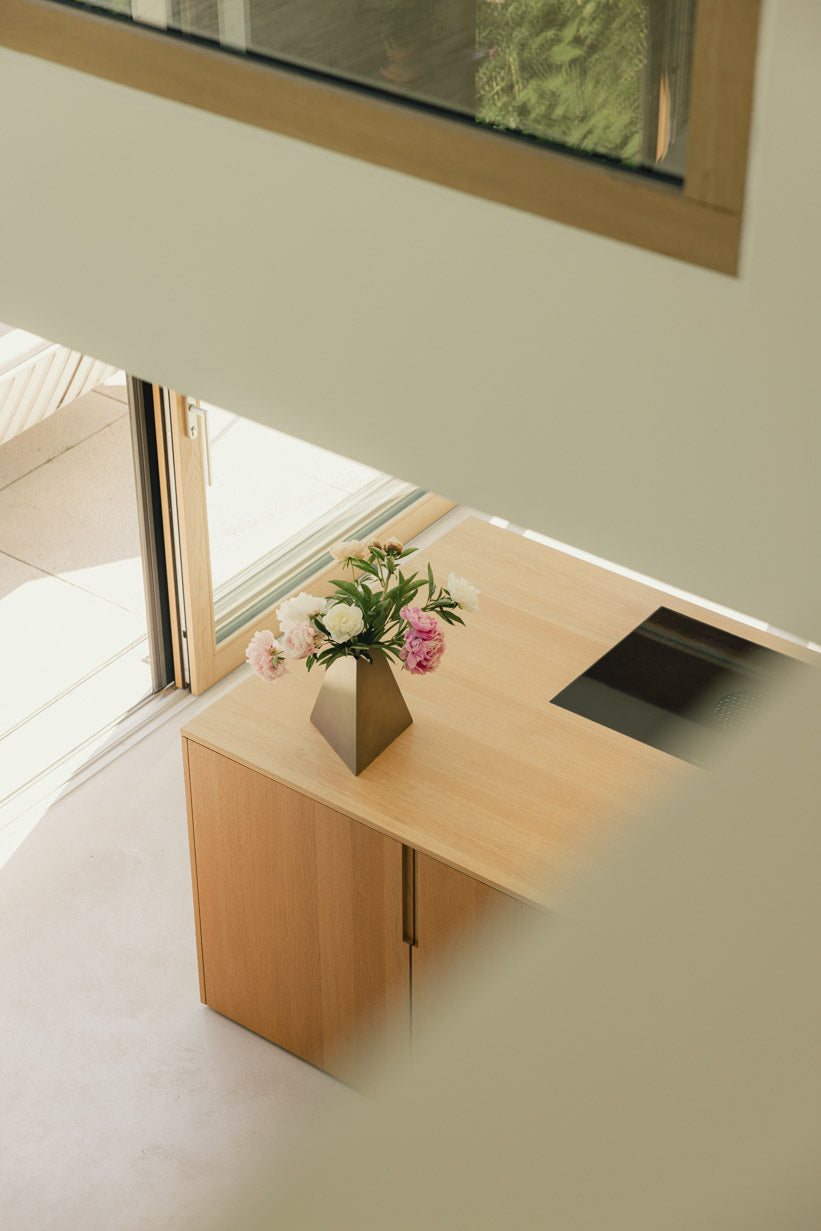
"I really enjoy working with concrete - I think that's very obvious. I think concrete is such a beautiful and natural material and it just brings the colors from outside into the room. However, since concrete is relatively cool, you obviously have to balance it out a bit. That's why we used a lot of wood and tried to keep it as natural as possible I think wood and concrete harmonize beautifully with each other. One of my absolute favorite materials is stainless steel or metal in general. That brings in a very modern aspect and at the same time it is a completely natural material. For me, stainless steel and wood work incredibly well together.
“Metal can also make a home feel warm and inviting.”
Speaking of metal: What role does Metallbude play in your home? And how does metal actually fit into (D)a warm living concept?
“We have it in basically every room in our house Metallbudein virtually every room in our house. It just happened that way. I actually bought a lot of things before moving in. I love the reduced design that fits into every room and at the same time looks super high-quality. It fits in with the rest of the furnishings, you don't have to think much about it and it just fits in - while at the same time it looks exceptionally beautiful. For me, metal is a real thing Key element in furnishings. I often receive messages and questions from customers who are concerned that metal cannot be warm and does not fit into a warm interior. For me, this is a misconception. Just because an interior should be warm, inviting and a place of well-being does not mean that you can only use warm and fluffy materials. Smooth materials and warm, soft materials so that you enter a room and simply think: Everything fits together here.” For me, you always have to find a good balance between cool, smooth materials and warm, soft materials. So that you enter a room and just think: Everything fits together here.”
"The fast pace of trends is super exhausting."
How do you feel about interior trends? Does it make sense to follow trends?
"Trends come and go quickly. That's why it makes perfect sense to integrate trends through decorative elements or smaller pieces of furniture that you can replace from time to time. But I think the key elements of a house - floors, built-in cupboards, kitchen - simply have to be timeless. You should be able to look at them in 10, 20 or 30 years. You can then play a lot more with smaller elements. But even when it comes to decoration, I try not to Following every trend is sometimes just really tiring. Especially when you consume a lot of social media and are on Pinterest and Instagram, you constantly see something new that everyone has. I find that if you try to ignore it and put things on a wish list and leave it there for a few weeks, you often realize that you don't actually need a lot of things. And if you choose more consciously, the interior becomes much more special.